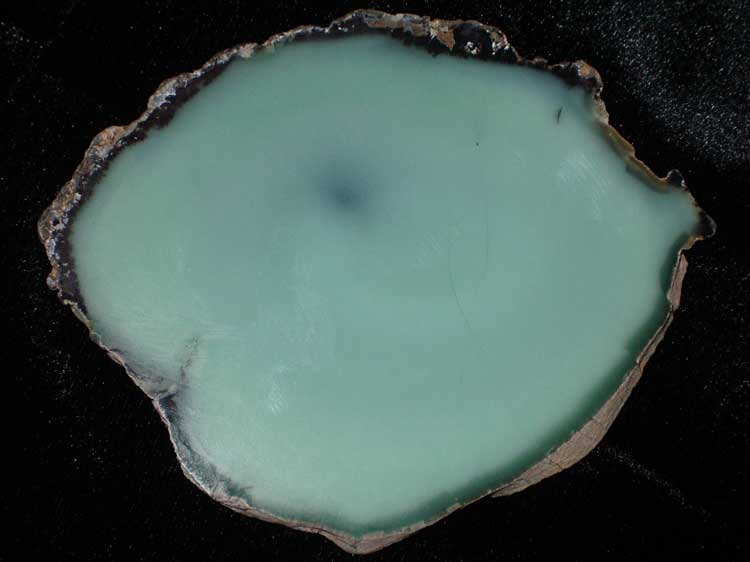
CHRYSOPRASE

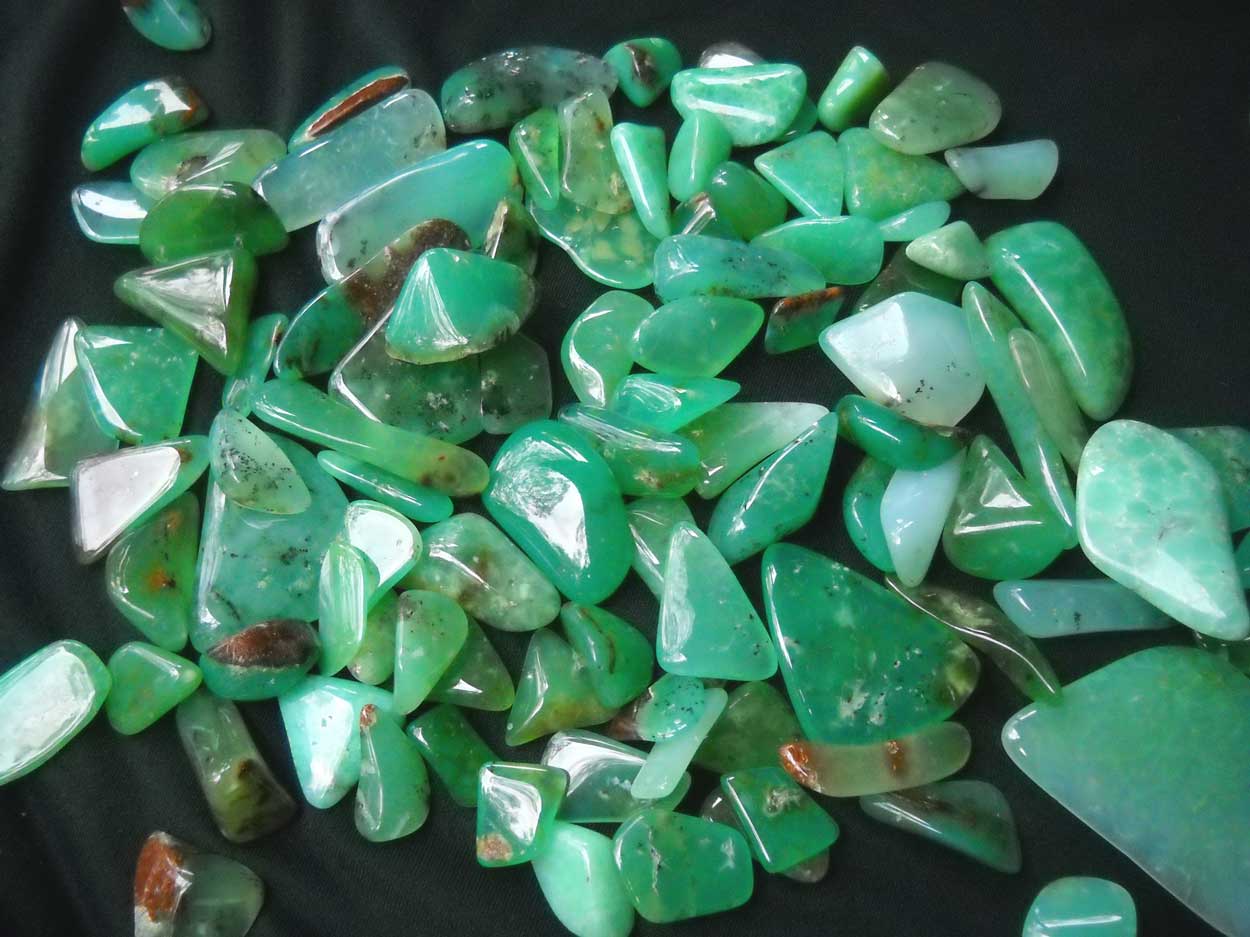


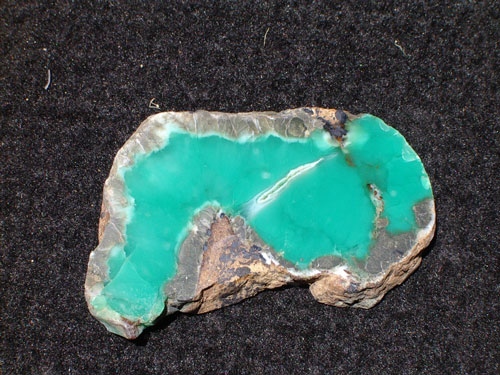
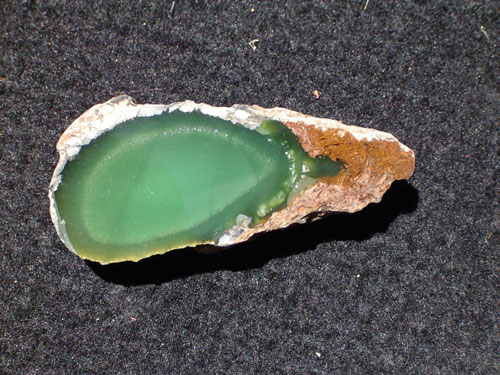

Chrysoprase for sale..click here
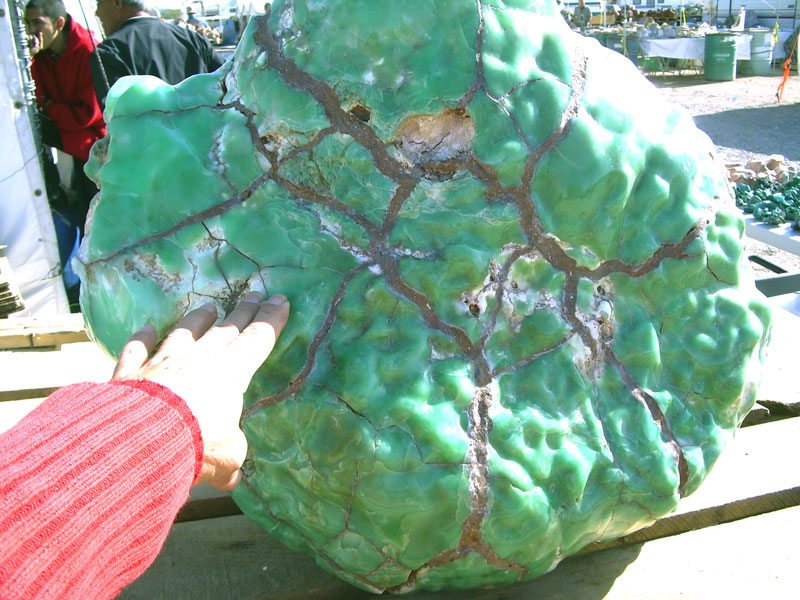
Chrysoprase is a variety of chalcedony that is coloured green by the presence of nickel mineralisation.
It is sometimes referred to as Australian Jade due to its resemblance to Burmese imperial jade .
The majority of
chrysoprase mined
in Western Australia came from a place called Yerilla which is about 100
miles
north of Kalgoorlie which in turn is approximately 400 miles east of
the capital, Perth.
Yerilla is situated in a
belt of country some hundreds of miles in extent that in
places is extremely rich in nickel,
in fact there are a number
of large nickel mines operating currently.
Weathering and alteration
(oxidation) of silicate minerals such as serpentine during lateritisation
generates iron oxides
and releases silica and nickel which are transported
down through the developing laterite profile to be re-deposited
in veins
and nodules (possibly replacing magnesite) where chemical conditions
provide favourable sites.
The opaline silica can take various forms such as multi-colored dendritic opalite, moss agate (dendritic chalcedony) and of course chrysoprase.
The
chrysoprase occurs usually as veins but sometimes nodules in the
saprolitic clays overlying serpentinites and peridotites.
Opaline silica and magnesite are two common indicators of these
areas and usually they all occur together.
There are also many other
locations where chrysoprase has been found, such as Jamieson and
Wingellina which are situated way out in the desert country.
The area where the chrysoprase is dug lies within an
aboriginal reservation (no white people allowed without permits).
So
the only time this rock becomes available, is when the aboriginals sell
the odd parcel of stone that they have dug......which is not very often.
Another location, is a
place called Murramunda (an aboriginal name) in the Pilbara
region of Western Australia, not far from the iron ore mining town of
Newman.
The photo beneath shows the location where we dug it, some years ago.